Posts

Attacking and Securing Oracle 10g & 11g

Found an old presentation I did from 2012 on Oracle database security: Download slides Some handy Oracle references: Oracle Data Redaction is Broken - David Litchfield Oracle Security Cheat Sheet - Red-Database-Security Oracle Database Listener Security Guide - Integrity Hacking Oracle From Web: Part 2 - Sid

Oracle Listener 11.1.0.7 Information Disclosure

Image
The other day I noticed a strange response I hadn't seen before when running a VERSION command against an 11.1.0.7 Listener: It seemed as though the Listener was leaking memory. I was able to reproduce this issue across other nodes in the RACs I had access to. Instead of the standard 348 byte TNS VERSION response I was getting a 2011 byte TNS response: I was also able to reproduce the result by running the VERSION command locally using the lsnrctl utility. With a bit of digging it seems as though 11.1.0.7 Listeners with CPU April 2012 (patchset 13621679) are vulnerable to a memory leak issue. Most likely due to a buffer not being terminated/copied correctly. This flaw could potentially come in handy during a pentest when trying to enumerate SIDs/Service names: I was unable to reproduce this flaw on Listeners patched with CPU July 2012 (patchset  13923474) -- meaning Oracle are most likely wise to the issue... Note: I was able to notice...

S/MIME: Bucking the phishing trend

Image
In recent years, phishing has become an increasingly profitable attack vector for online scammers. According to RSA’s The Year in Phishing (2013) report, the total number of phishing attacks in 2012 increased by 59% and resulted in global losses of $USD 1.5 billion. With this upward trend in online fraud predicted to continue, it’s pertinent to take a look at how these attacks are so successful and what can be done to buck the increasing trend of online fraud. Phishing is the process whereby someone (malicious) masquerades as a trusted entity to solicit information. Relying on the art of deception, these attacks fair particularly well online as people are less likely to pick up on the fraud cues. Phishers frequently target email as their preferred attack medium due to its lack of security controls – in particular, the absence of authentication. The critical issue surrounding email is trust. That is, how can we trust an email has come from who it purports to come from? If we look at...

Password Hashing: Best Practice

Image
Last week I read a post on Brian Krebs’ blog where security researcher Thomas Ptacek was interviewed about his thoughts on the current landscape of password hashing. I found Thomas’ insights into this topic quite pertinent and would like to reiterate his sentiments by talking a little about the importance of choosing the right password hashing scheme. The idea of storing passwords in a “secret” form (as opposed to plain-text) is no new notion. In 1976 the Unix operating system would store password hash representations using the crypt one-way cryptographic hashing function.  As one can imagine, the processing power back then was significantly less than that of current day standards. With crypt only being able to hash fewer than 4 passwords per second on 1976 hardware, the designers of the Unix operating system decided there was no need to protect the password file as any attack would, by enlarge, be computationally infeasible. Whilst this assertion was certainly true in 197...

Exploiting the Windows Domain

Image
A common recommendation I often come across is that Internet-facing systems should not be a part of an active Windows domain. As an exercise of interest, I have decided to look at this topic a little deeper and explore what advantage (if any) access to a domain member really provides. In this scenario I will demonstrate how to gain privilege within a Windows domain using only the tools available on a default Windows install. I will be working under the assumption that: I have access to a public terminal (or something similar) with up-to-date anti-virus. I do not have administrative access on the host. I do not have access to any third-party tools. Once connected to a Windows workstation, the first piece of information I want to find is the domain namespace. This can be done a couple of different ways: nbtstat –A <IP-Address> net config workstation Next, because I am working from a domain member, I can query the domain controller and check whether it’s aware of ...

Cracking OS X Lion Passwords

Image
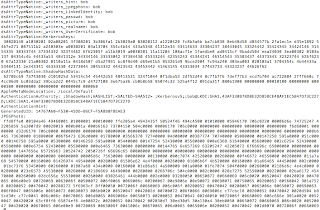
UPDATE [2011-10-15]: The issues described in this post have now been resolved by Apple. Users running OS X Lion 10.7.2 or security update 2011-006 are no longer affected by the vulnerabilities detailed below (CVE-2011-3435 and CVE-2011-3436). For further details on this security update please see Apple's advisory . In 2009 I posted an article on Cracking Mac OS X passwords . Whilst this post has been quite popular, it was written for OS X 10.6 and prior. Since the release of Mac OS X Lion (10.7) in July, I have received numerous requests for an update. Typically, I would have just updated the existing article without the need for a new post. However, during my research I discovered something interesting about OS X Lion that I'd like to share. In previous versions of OS X (10.6, 10.5, 10.4) the process to extract user password hashes has been the same: obtain the user's GeneratedUID and then use that ID to extract hashes from a specific user's shadow file (See my pr...

Attacking LM/NTLMv1 Challenge/Response Authentication

Image
In Part 1 of the “LM/NTLMv1 Challenge/Response Authentication” series I discussed how both the LANMAN/NTLMv1 protocols operate and the weaknesses that plague these protocols. In this post I will demonstrate how attackers leverage these weaknesses to exploit the LANMAN/NTLMv1 protocols in order to compromise user credentials. For the remainder of this article I will be focusing on attacking the SMB protocol (Windows file sharing) as this is where LANMAN/NTLMv1 is most commonly used. Capturing the Response In order to capture a client’s LANMAN/NTLMv1 response, attackers will often utilise one of two methods: Force the client host to connect to them Conduct a man-in-the-middle (MITM) attack and “sniff” the client’s response To demonstrate these methods, I will be using the Metasploit Framework or Cain and Abel respectively. Metasploit In order for a client host to connect to us, we first need to create a listening SMB service that will accept incoming connections. Fo...

LM/NTLMv1 Challenge/Response Authentication Explained

Image
The Microsoft Windows platform uses a myriad of protocols to authenticate users across a network. Two such protocols widely in use today are the LANMAN challenge/response and NTLMv1 protocols. Whilst newer, more secure protocols (such as NTLMv2) are ready to take their place, LANMAN challenge/response and NTLMv1 are still widely deployed today for reasons of interoperability. As with most things Microsoft-related, ubiquity often equates to exploitability. In this two part series I will discuss how the LANMAN challenge/response and NTLMv1 protocols operate, how malicious users can take advantage of their shortcomings, and best practice recommendations for securely deploying these protocols. Microsoft Windows supports two primary algorithms for locally authenticating users. These algorithms generate what’s known as an “LM Hash” or an “NT Hash”. Enabled by default in Windows NT, 2000, XP, and Server 2003, the LM Hash has become synonymous with bad hashing practices over the years...

Attacking and Securing PEAP

Image
Protected Extensible Authentication Protocol (PEAP) is often regarded as a secure 802.11 wireless authentication protocol. Whilst PEAP has the ability to become a secure protocol it is certainly not without its deficiencies. I thought I would take this opportunity to provide everyone with an overview of the PEAP protocol by examining what it is, how it works, where its shortcomings lie, and how to secure it. Before we dive into the security concerns surrounding PEAP it is important to know there are currently three versions of the PEAP standard. The version I will be referencing throughout the remainder of this post will be PEAPv0. This is the most common deployment of the PEAP standard. PEAP is a widely deployed Extensible Authentication Protocol (EAP) type used to securely authenticate users against 802.11 wireless networks. Developed by Microsoft, Cisco and RSA, PEAP has been made popular through its continued support by the Microsoft Windows platform. PEAP has the ability to su...

Password Wordlists and Dictionaries

Password wordlists and dictionaries are an often imperative resource for any password auditing exercise. I thought I would take this opportunity to consolidate a list of wordlists /dictionaries for ease of access. Please feel free to post any resources I have omitted in the comments below. I will periodically update this post with any new resources I come across. http://ftp.sunet.se/pub/security/too...all/wordlists/ http://www.skullsecurity.org/wiki/index.php/Passwords ftp://ftp.ox.ac.uk/pub/wordlists/ http://gdataonline.com/downloads/GDict/ ftp://ftp.openwall.com/pub/wordlists/ ftp://ftp.cerias.purdue.edu/pub/dict/ http://www.indianz.ch/tools/doc/wordlist.zip http://www.outpost9.com/files/WordLists.html ftp://ftp.openwall.com/pub/wordlists/passwords/ https://www.securinfos.info/wordlists_dictionnaires.php ftp://ftp.ox.ac.uk/pub/wordlists/ http://www.lostpassword.com/f/wl/bigdict.zip http://www.lostpassword.com/f/wl/French.zip http://www.lostpassword.com/f/wl/Spanish...

Is WPA Secure? - Part 1

Recently I have noticed quite a bit of conjecture surrounding the Wi-Fi Protected Access (WPA) protocol and its use. With media hysteria now promoting WPA as no longer secure , wireless security has, unfortunately, become another great unknown to many people. In this three-part series I would like to delve into the WPA protocol and provide a background on its history, how it works and assess whether WPA is indeed insecure. By the end of this series I will have provided a foundation which will hopefully help answer two of the most common questions surrounding the wireless-security space: “Is WPA secure?” and “Should I be using WPA?”. To be comfortable in understanding the insecurities of the WPA protocol, Part 1 of this series will provide a brief background on 802.11 security. Designed as a basic security measure to secure 802.11 wireless networks, Wired Equivalent Privacy (WEP) was implemented to provide simple confidentiality to wireless networks. Soon after its inception, weakne...

Cracking Mac OS X Passwords

In this post I will demonstrate how to both extract and crack Mac OS X passwords. The OS X variants that this tutorial is aimed at are 10.4 (Tiger), 10.5 (Leopard) and 10.6 (Snow Leopard). Whilst Mac OS X is based on a Unix variant (BSD), there are several key differences between traditional Unix-based and Mac OS systems when it comes to password storage. Lets take a quick look at some of the differences. If you have ever poked around on an OS X system, you may have noticed the absence of the /etc/shadow file. Whilst traditional Unix and BSD variants store their password hashes in /etc/shadow and /etc/master.passwd respectively, Mac OS X does not. Since the release of OS X 10.3 in 2003, Macintosh products have stored their shadow files in the /var/db/shadow/hash/ directory. Another key difference is the way in which the two systems store their hashes. On a Unix-based system, every hash associated with the system is stored in the /etc/shadow file. This differs from OS X whereby each ...

Bypassing Anti-virus

Whether compromising a system for legitimate or non-legitimate purposes, bypassing anti-virus software is often an integral step in any intrusion exercise. Fortunately for enterprise, anti-virus and anti-malware software is now commonplace in most organisiations. Whilst many of the tools that attackers wish to implement are constantly being blacklisted, this isn't without reservation. Attackers are still getting malware into systems and penetration testers are still able to compromise systems. So the question is, how is this possible? The answer: Bypassing anti-virus, of course. In this post I intent to present several tools that can be used in bypassing anti-virus/anti-malware software. I will provide a brief background on each tools operation and a summary of its use. But first, some background. Anti-virus software typically works by using either signature-based detection or heuristic-based detection (some products use both). Signature-based detection products rely on rec...

Milw0rm Alternative is Here!

Offensive-Security has announced its new exploit archive: Offensive Security Exploit Database

Metasploit Autopwn: Hacking made simple

Image
Nowadays, exploiting a system requires little, if no knowledge of computer systems or networking. Merely, someone with 10 minutes on their hands that is interested enough to Google how it’s done. One with very little skills has the ability to fire up Metasploit, load an exploit, and fire it at the target system – giving attacker’s the ability to compromise a system within minutes. I thought I would write a post on Metasploit’s autopwn module to reiterate just how simple it is to attack/compromise a system in today’s environment. My intentions here are to give you a tutorial on the Metasploit autopwn module and provide a timely reminder on just how important it is to have a good patch policy in place. I would also recommend regular audits on system services. The tools I will be using in this tutorial are: Nessus - A free vulnerability scanner for Mac OS, Windows and Linux Metasploit – framework 3 - A free exploit framework for launching exploits against targets A virtual machine runni...